Care Tips
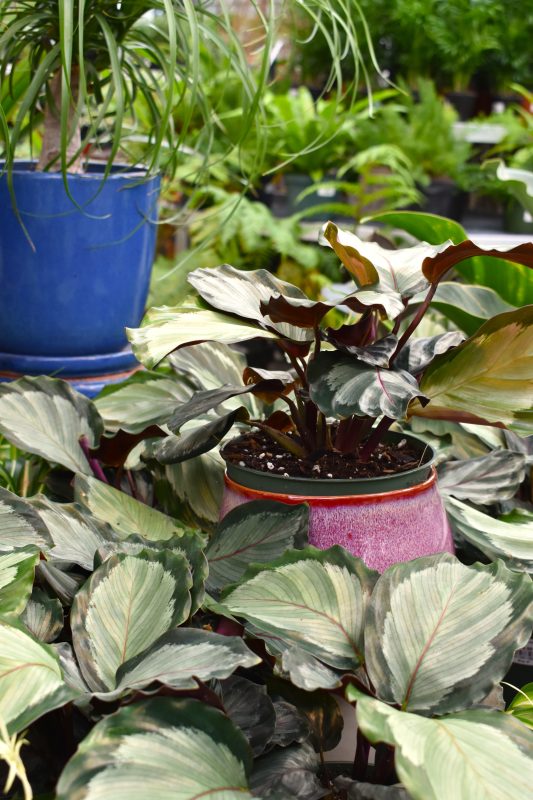
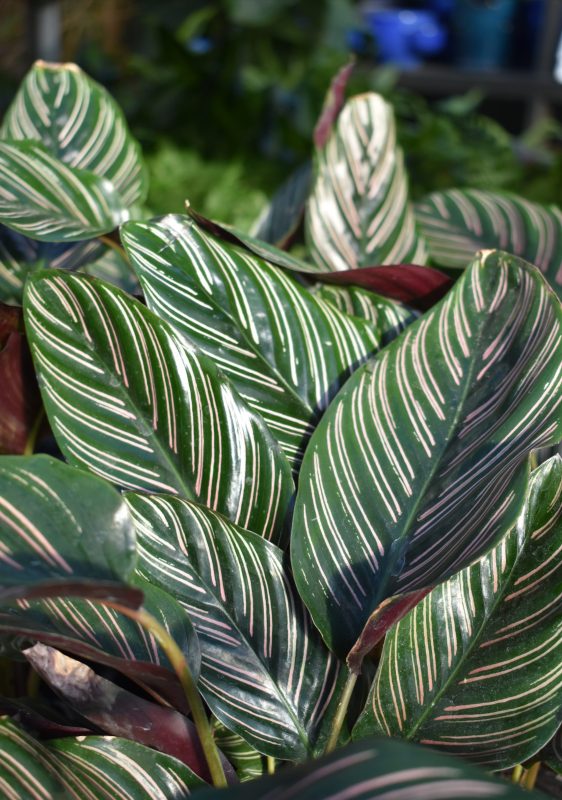
Light: Calathea plants are a great choice for a low light area. Place in a space with indirect sunlight, they do not like direct sun light as it burns their leaves and causes their beautiful patterns to fade.
Watering: Keep their soil moist but not soaking wet. Calathea can be sensitive to chlorine or fluoride in tap water, causing brown tips or edges. Using distilled or filtered water can help prevent this.
Soil: Plant in light, well-draining soil.
Temperature: Calathea are tropical plants and because of that they can be sensitive to the cold and thrive in high humidity. Ideally, maintain a humidity level of 50-60% to support optimal development. Dry air can cause their leaves to curl, dry, or develop brown edges. To boost humidity, mist the leaves occasionally in the morning, use a humidifier, or place the plant on a pebble tray filled with water to increase the surrounding moisture.
Fun Facts
– Quick growing, they typically reach their mature size within a year or two.
– Their leaves move around to adjust to the light they’re receiving.
– There are many different types of calathea with various eye-catching patterns.
– Calathea can be rather finicky plants and are not necessarily recommended for beginners.
– These plants are very prone to yellow & brown leaves. This can be due to over or underwatering, low humidity, or sometimes a nutrient deficiency. In some cases, a yellow leaf, especially at the base of the plant, is normal and a part of the aging process of the plant.